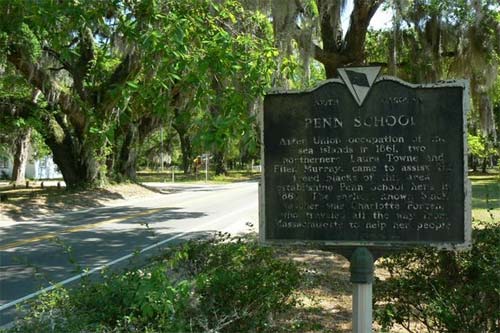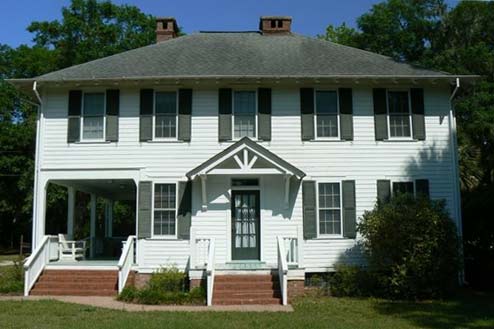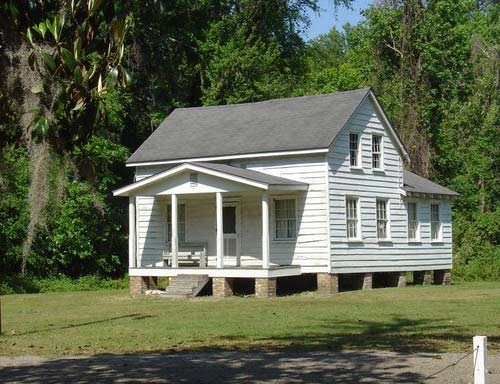
Penn Center, or Penn School as it was originally called, was founded in 1862 – about six months before the Emancipation Proclamation was issued, and about three years before the Civil War ended.
It was one of several schools established on Saint Helena Island as part of the Port Royal Experiment. The leaders of this experiment were primarily philanthropists, abolitionists, and missionaries from Pennsylvania. They came to the Beaufort area after Union soldiers took control of the Port Royal Sound and forced the Confederates to flee, and their purpose was to help abandoned slaves prepare for freedom by teaching them how to read and survive economically. They named the school in honor of their home state, which in turn had been named for Quaker activist William Penn.
Penn Center has played a tremendous role in the development of African-American culture – and more recently, in its preservation. By the early 1900s it had adopted Booker T. Washington's model of industrial training. This model focused on teaching black people trades like cobbling and carpentry that would help them earn livings. In Washington's own words, he wanted to make them "so skilled in hand, so strong in head, so honest in heart, that the Southern white man cannot do without [the]m."
The school continued to teach students until the middle of the twentieth century. At this time, after 86 years, the school shifted its focus and began to offer community services such as day care and health training. The change came about for a variety of reasons. One reason was that black families were moving north, causing enrollment to decline. Another important reason was that South Carolina's state and county governments finally began to take steps towards providing a more thorough education for black children. Before 1948, the public school system was only required to educate blacks through the seventh grade.
During the Civil Rights Movement, Dr. Martin Luther King, Jr. and the Southern Christian Leadership Conference often met at the Penn Center. The center served as a rare retreat where members of both races could meet peacefully without being threatened or harmed.
More recently, Penn's leaders have turned their attention to preserving the unique culture of the Sea Islands in the onslaught of tourism and residential growth. They hold workshops to teach people how to protect heirs property and defend themselves against developers. They also organize the annual Penn Center Heritage Days Celebration, which honors Gullah traditions.
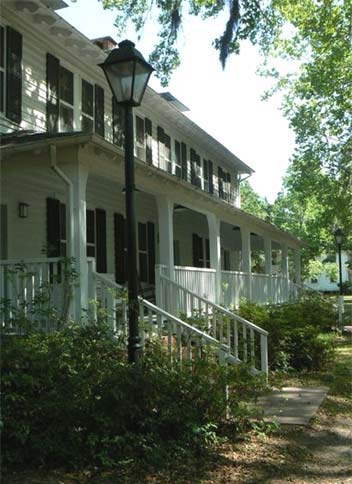
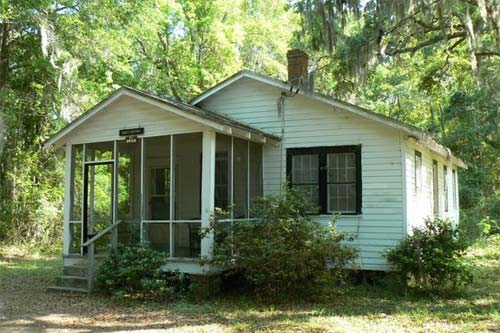
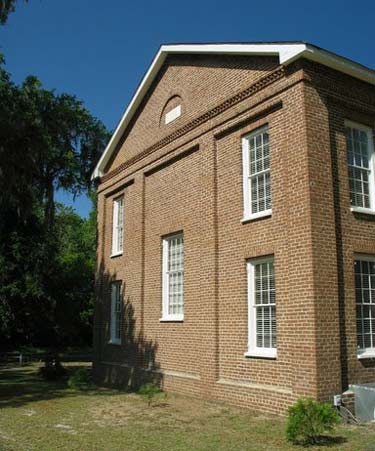
Penn Center is a National Historic District Landmark located along both sides of Land's End Road (SC 37), near Chowan Creek. Its 50 acres are home to 19 historic buildings, including Darrah Hall and Brick Church. The York W. Bailey Museum is open Monday through Saturday.
Brief historical overview - Penn School's first classes were held in the living room of the abandoned Oaks Plantation. Quickly outgrowing that space, it moved first to Brick Church and then to across the street to its permanent campus.
More historical highlights - Info about founders Laura Towne and Ellen Murray, Penn's namesake, and Penn's role on St. Helena from 1862 to the mid-1900s
Penn Center photos from the Library of Congress - Dozens of historic images - Click link with a building's name, then click "b&w photos" icon - A few buildings also have "color transparencies" icon
Building Diverse Communities - 1995 case study of the Penn School for Preservation's role in preserving cultural traditions and ensuring economic survival for Sea Island blacks
Related Resources
Mather School - School for daughters of former slaves - Located in Beaufort, it was founded shortly after the Civil War and operated until 1968.